

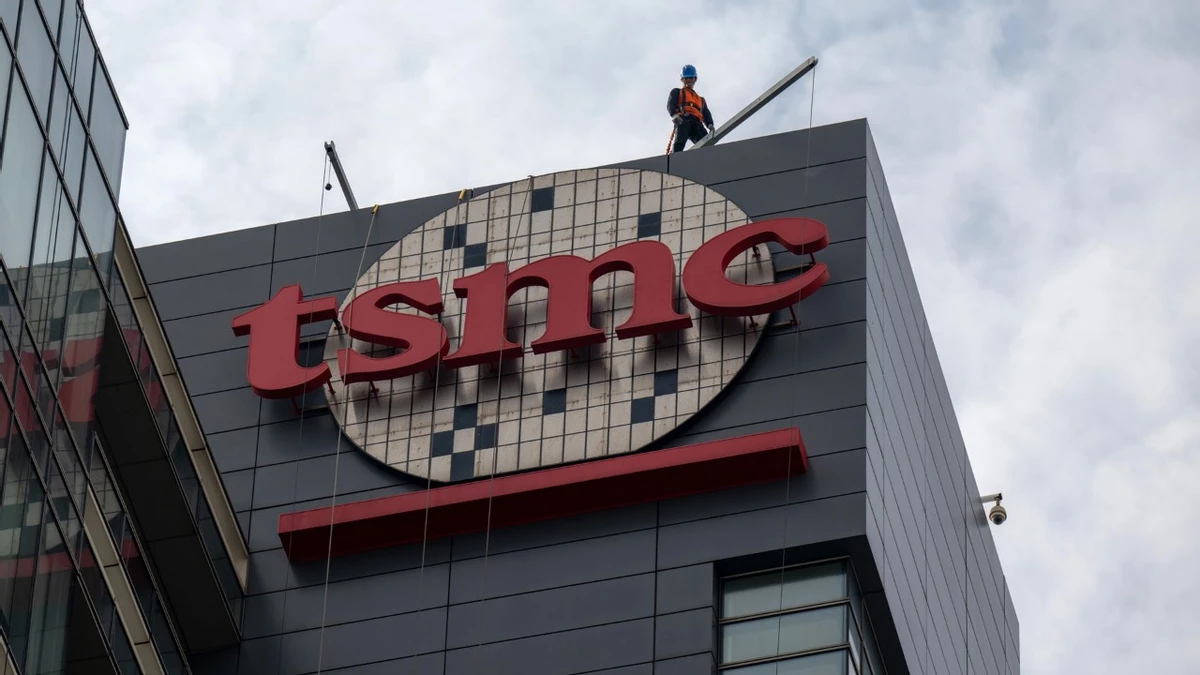
TSMC chief says Intel Foundry won't succeed in chip manufacturing by simply "throwing money at it"
TSMC Chairman C.C. Wei commented on Intel Foundry's achievements in the semiconductor industry, emphasizing that his company is not concerned about competition. TSMC maintains its leading position in the contract chip manufacturing market. Growing demand from customers in the high-performance computing (HPC) and artificial intelligence sectors has allowed the company to strengthen its position. However, TSMC's production capacity constraints create opportunities for competitors, primarily Samsung and Intel Foundry. These players are actively attracting customers who can no longer place orders with TSMC. Intel Foundry has recently shown notable success. Its 18A and 14A technology processes are cause for optimism, and the Panther Lake platform, based on 18A, is seen as evidence that Intel is becoming a serious player in the contract manufacturing market. Giants such as Apple, NVIDIA, AMD, and Qualcomm have already shown interest in the 18A-P and 14A processes. Although this has not yet led to manufacturing contracts, Intel is clearly set to compete with TSMC on equal terms.
When asked whether Intel's progress could threaten TSMC's market share, C.C. Wei replied that the company is not concerned. He noted that TSMC does not underestimate its competitors' achievements, but has been operating successfully in a highly competitive environment for more than 30 years and is confident that it will achieve its growth targets.
During the financial results conference, the TSMC chairman also explained why capital investment alone does not guarantee success in the production of advanced chips. According to him, the key factors are not only finances, but also competent preparation of production lines, thorough certification of designs from partners, and capacity expansion to serve external customers. It is this comprehensive work, not just investment, that determines leadership in the industry. C.C. Wei's comments are partly related to the US administration's decision to allocate $8.9 billion to support Intel Foundry with the backing of NVIDIA and SoftBank. In response, TSMC is increasing its investments in the US: a factory in Arizona is preparing to launch production lines for chips using the highly sought-after 3nm process technology. In addition, TSMC plans to gradually increase prices for 2nm wafers for four consecutive years.
The situation on the semiconductor market remains dynamic. The growing needs of the artificial intelligence industry require the participation of several large manufacturers, so the rivalry between TSMC and Intel is likely to intensify. It will be particularly interesting to watch this competition unfold in the coming years.