

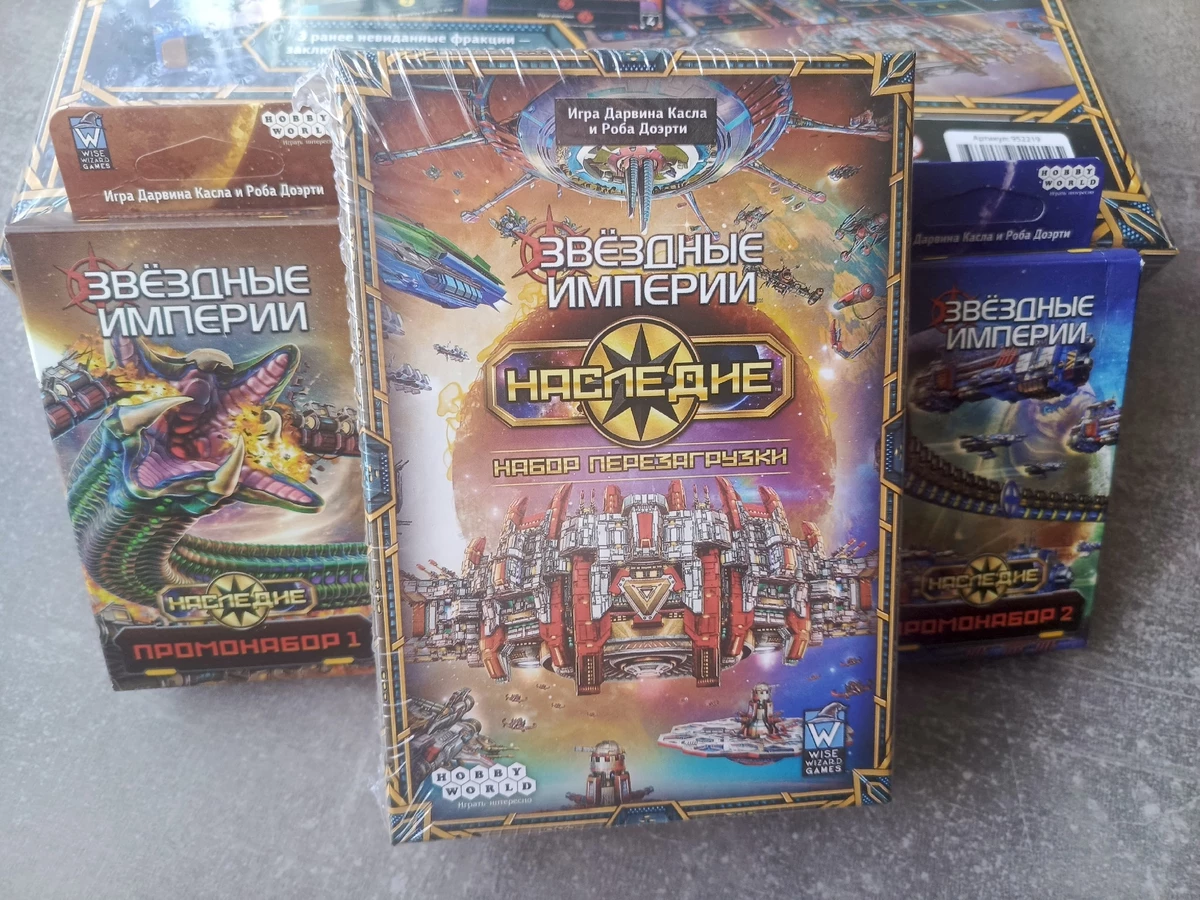
The "Star Empires" setting has become a familiar spot for fans of deck-builders: short matches, tense duels, and a lot of tactical wiggle room. Time, however, nudges even a comfortable favorite toward change. Late in 2025 a new edition hit Russian shelves — not merely an expansion full of cards, but a campaign that scarifies your deck as you play. Hesitant about permanence? The publisher included a workaround: the "Reload Kit," so you can replay the narrative without committing your physical cards permanently.
Campaign for Two and New Factions
"Legacy" sets itself earlier than the base game: a prequel centered on the Trade Federation vs. the Star Empire. The campaign runs twelve scenarios, each tucked into its own sealed envelope. Although box text mentions up to six players, the main arc is squarely for two — other folks may join later, using the campaign-shaped deck you produce.
Mechanically, four classic factions yield to three new ones: the Consortium, the Kingdom, and the Scavengers. They tinker with the trade row in unfamiliar ways and push you out of old patterns. Many purchases now have on-buy triggers, so timing trade-token spending matters more than before (i.e., you can’t mindlessly grab a ship and expect the same result). The familiar skeleton of the game remains: play cards, gather resources, buy ships/bases, and whittle down your opponent’s influence.
Legacy Mechanic and Sticker System
Stickers do more than add a bonus—they can change a card’s faction label. After modification, a card counts as both its original type and your faction, which twists alliance synergies in unexpected ways. Over a campaign your deck morphs into a collection of hybrid cards that exist only for that run; they’re not generic upgrades but narrative artifacts.
You don’t lose everything after four sticker scenarios: unused stickers carry over, and upgraded cards remain in the shared trade deck forever. That means your past choices can become future problems or opportunities — opponents might end up buying the very thing you improved, for example.
Campaign Progression and Temporary Changes
From scenario five onward an event deck enters play. The previous winner picks one of two event cards to slip into the common deck; when it appears, both players feel its effect (e.g., extra income or boosted attack). Winning thus yields concrete leverage, not just bragging rights.
There’s also a Gambit deck aimed at rebalancing: the player trailing in campaign score gains access to these one-shot boosts. In tight sessions a Gambit can flip a turn. Victory is tracked with special VP cards awarded per scenario; whoever hoards the most by match twelve is crowned the campaign champ.
The twelfth scenario flips the script: instead of head-to-head you fight a shared adversary, so two enemies briefly cooperate against a stronger AI-like threat — a nice variation from pure competition.
Reload Kit. Eternity in a Box
One gripe with legacy designs has always been permanence: once you sticker and slit envelopes, the box’s life is, well, limited. The "Reload Kit" aims to sidestep that. It’s a 190-card set containing every possible upgraded version you might create during the campaign. Instead of pasting a sticker, you swap in the corresponding pre-printed card from the kit. After the run you can return everything to its original state — no sticky residue, no ruined sleeves.
The kit even includes the sixty original trade-deck cards, useful if you already stickered your base set and want to restore it. Practically speaking, this lets you replay the campaign with different groups, different faction choices, and different tactical roads, without guilt or damage to components.
Gameplay Features
New layers arrive, but the core formula is intact. Winning a scenario grants upgrade control: you can add faction properties to cards, and some of those properties compound into genuinely potent combos. Left unchecked, a stronger upgrade path can snowball, widening gaps between players. Some upgraded cards turn into real wrecking balls or into near-impenetrable defenses — fun if you like power spikes, frustrating if you prefer constant balance.
Visual Design and Components
Visually the set feels like an evolution rather than a reinvention. New faction art blends into the existing aesthetic; the production values are high. The central board and dedicated influence disks are welcome fixes for the loose counter cards of old. Card stock is thick, stickers print clearly and stick well (though heavy use will show wear eventually, as with any adhesive). The Reload Kit tucks into the main box cleanly, which is practical if your table space is tight.
Verdict
If you don’t mind a campaign that favors steady mechanical evolution over wild narrative turns, and you want the option to replay without committing your cards, this edition delivers — especially with the Reload Kit. Expect tactical depth and occasional runaway effects; bring friends who enjoy card-shaping choices, not just story surprises.