

A Lot of Details About Crimson Desert, From Mechanics to World Size
The scale of Crimson Desert hits you before the first cutscene. Pearl Abyss — the studio behind several MMOs — built a map that’s roughly twice Skyrim’s size; that alone sounds like a promise, until you start counting. There are 2,921 units of "knowledge" to unlock — e.g., notes from shops, snatches of dialogue, certain locations (some of which demand you to collect mounts). It becomes a scavenger hunt at times.
Other raw stats read like someone scribbled down every design idea: 573 territories, 110 factions, 355 crafting guides, 29 types of riding animals. Impressive on paper, yes, but the pacing isn’t always kind. Puzzles can drag; controls feel fiddly sometimes — that tension between ambition and execution is hard to ignore.
The world sits on two planes. The lower is the usual open world, full of fights and quests; above, floating sky islands hover, linked to something called the Abyss. Those islands lean into brain-teasers, and they seem to carry narrative weight (the kind of places where story and environmental tricks meet).
Factions stake claim over regions, and your actions nudge a loyalty rank upward — complete enough errands and a settlement’s attitude shifts. The skill system ditched strict classes for a universal tree: Cliff is a hybrid build, mixing melee, archery, aerial moves, and a hard-hitting combat style in one package. Abilities are often chained by button combos (yes, muscle memory matters).
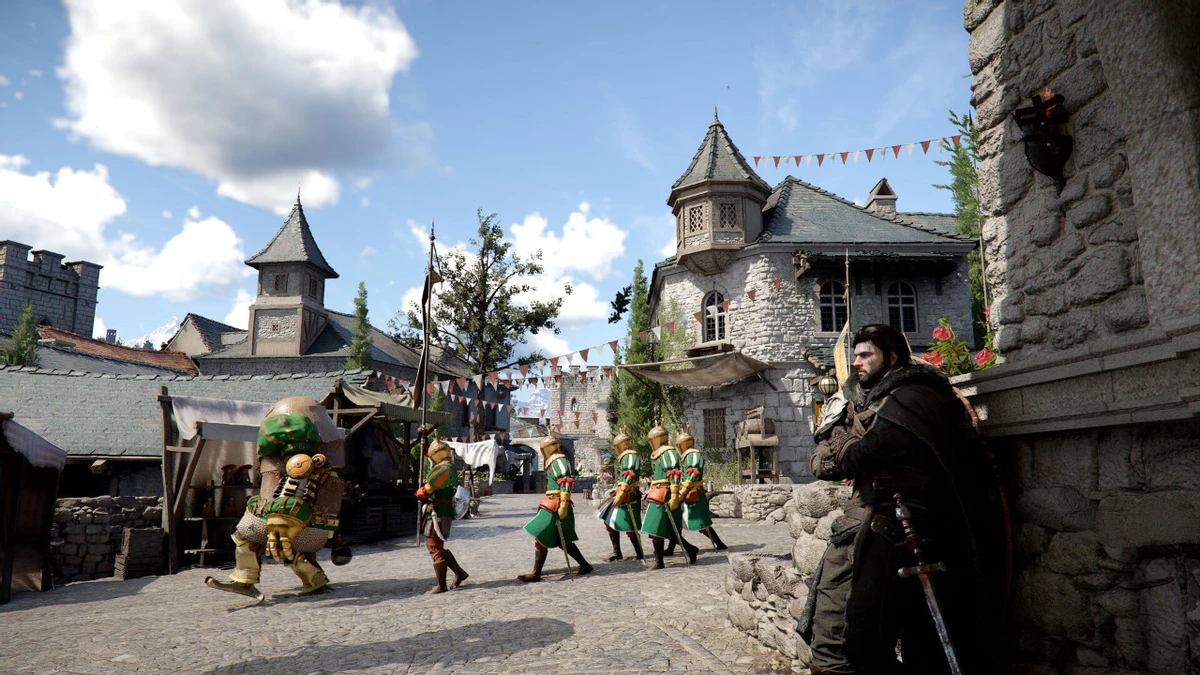
You can play by the rules or not. In towns, bounty contracts let you chase and cuff fugitives for a reward. Go rogue yourself — theft requires a mask, and attacking guards turns a city against you. If you get caught (or just lose a fight after committing crimes), expect jail time and a slice of your money to vanish.
I found parts of it thrilling, other parts frustrating — mostly because the scale sometimes feels like a feature and sometimes like clutter.