

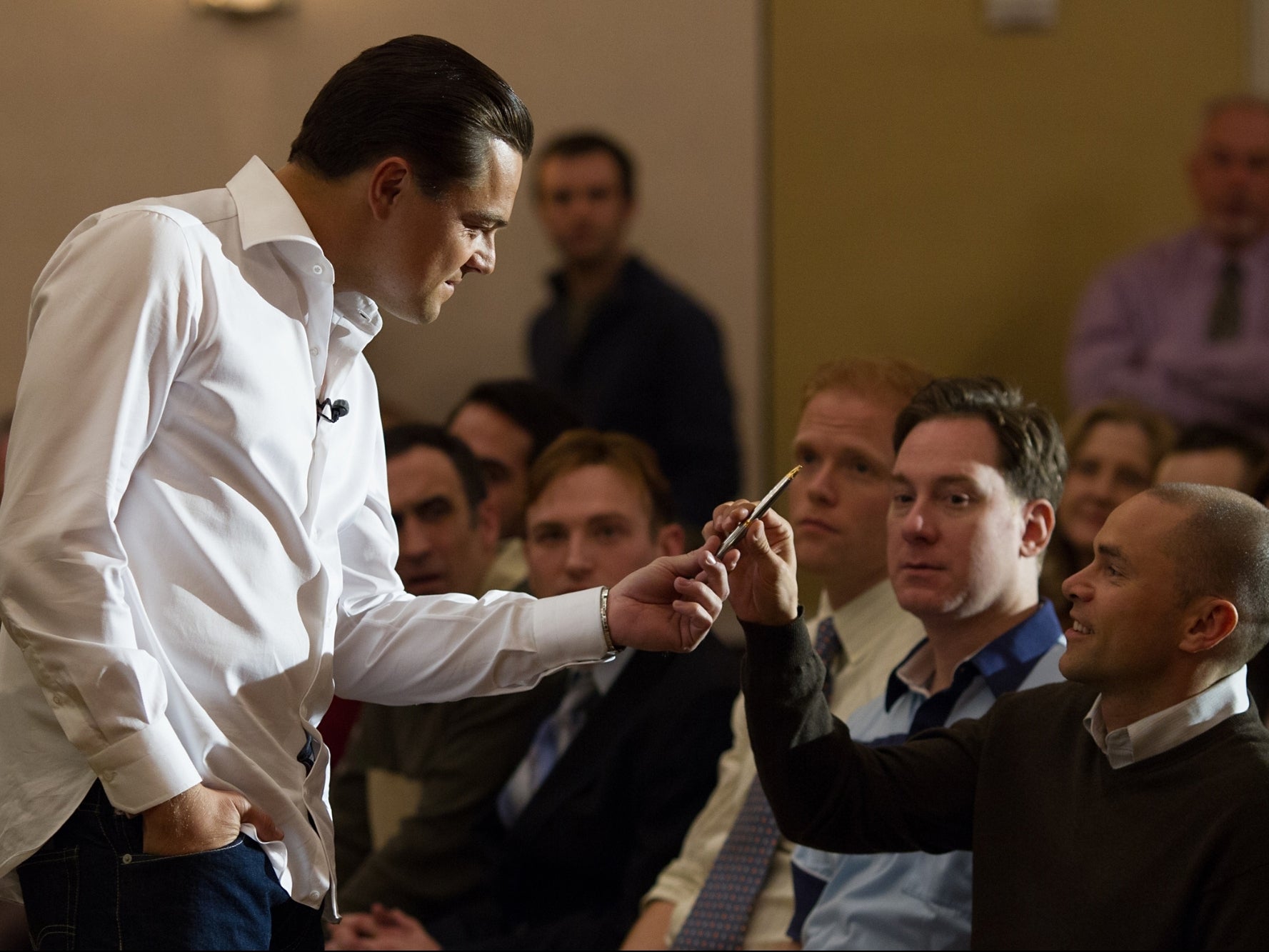
Sell me this pen: 5 movies about deals that teach you to negotiate
Prices often look like laws — fixed, immovable. Yet in daily life they wiggle: a taxi ride on a rainy Friday can cost twice as much and you either pay or walk away. In the films below, characters refuse to accept those givens; they haggle, invent needs, or rewrite the rules mid-conversation. Jordan Belfort turns an ordinary pen into urgency, Aladdin argues over the wording of a wish, Tarantino’s Mr. Pink flat-out rejects customary pressure, and Guy Ritchie’s deals run on improvisation and absurd side-conditions. If you want to try the same kind of negotiating in real life, there's Drivee: no hidden fees — you name the fare, the driver accepts or counters (i.e., real people, real choices).
"The Wolf of Wall Street": how to create demand
That infamous pen test doesn’t start with product specs. It starts with context — someone needs to write. Most responses orbit around features; useless if the buyer doesn’t have the immediate problem. Brad’s move is blunt: ask for Belfort’s phone number. Suddenly the pen has purpose and the sale closes.
Movie fact: This "Sell me this pen" tactic comes from the real Jordan Belfort. The trick: don’t fake product virtues — find a specific, pressing need and fill it.
Drivee’s relevance? Simple, but not simplistic: instead of an algorithm jacking up fares for rain/rush/holidays, you assess urgency and offer a price. You set the context — e.g., how late you are, whether you can wait — and propose the fare. No opaque surge number; just your call.
"Reservoir Dogs": the right to a reasoned refusal
Tarantino opens with a casual argument about tipping — except it's not casual. Mr. Pink refuses to tip “because that’s what you do,” and he stands by it. Irritating? Sure. But also a reminder: obligations imposed by habit aren’t the same as personal choice.
Movie fact: Steve Buscemi, despite this character’s stinginess, is known to be generous in real life. Tarantino cast him to underline the role’s contrarian streak.
How does Drivee echo Mr. Pink? Think of the usual ride apps as social pressure made automatic. Drivee removes that assumption: tariffs aren’t handed down — you propose a fare and either the driver accepts or suggests another figure. In short: opt out of default pricing if it doesn’t sit right with you.
"Snatch": bargaining as a process
Buying Mickey’s van is chaos: the buyers point out flaws, Mickey invents perks (puppy included), and the deal mutates into something barely recognizable. Negotiation here is theatrical and iterative — offers, counteroffers, strange add-ons. Watch closely and you’ll see bargaining as a living thing, not a checkbox.
Movie fact: Mickey’s accent was a deliberate move by Guy Ritchie after critics said earlier characters were hard to follow. He exaggerated pronunciation so nobody could claim to understand everything.
Drivee and Snatch? The app mimics human back-and-forth: if a driver dislikes your offer, they can counter. Negotiation unfolds in real time, not as a done deal dictated by an opaque algorithm. It’s practical, a little messy, and more honest for that reason.
"Aladdin": transparency of terms
Even in the fairy-tale version, the Genie’s power comes with strict wording. Aladdin learns that how you phrase a wish changes everything. The twist isn’t mystical; it’s linguistic — clarity matters, loopholes matter, and so do explicit limits.
Movie fact: The Genie’s rules make the story less about magic and more about reading the fine print — a clever way to turn fantasy into a lesson on contracts.
Drivee’s side of the bargain is explicit: passengers name a price, drivers accept or counter, and there are no hidden surcharges sneaking in afterward. In other words, the terms are visible up front (e.g., no surprise fees tacked on after you ride). No enchanted loopholes — just plain language and the chance to negotiate it if you want.