

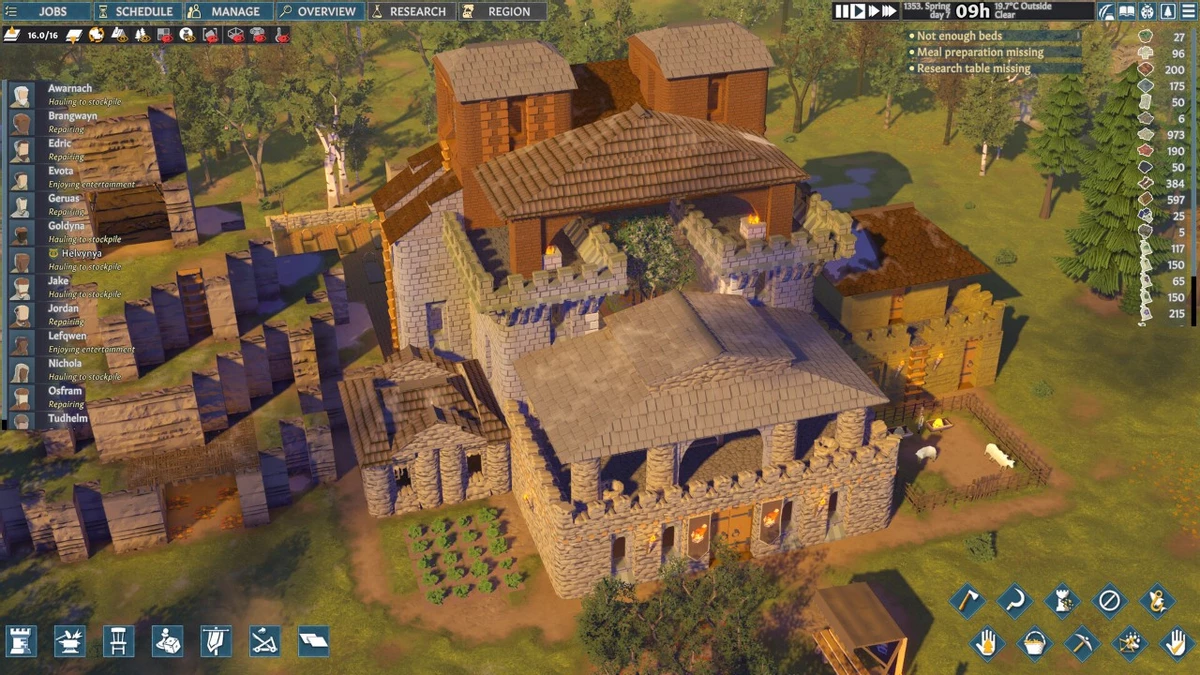
The team behind Going Medieval is rolling out a meaningful tweak to how buildings behave — something aimed at putting an end to those sudden cave-ins and the perpetual headache of guessing whether a floor will hold. The change is slated to arrive in an upcoming update focused on construction and resource gathering.
Right now the stability model is unforgiving. Every piece has a durability score and support drops off the farther you get from a load-bearing point; tweak a wall or extend a wing and bits of your base can decide to fall apart. It’s not rare to be blindsided: one small remodel, and part of a structure gives way. (Been there; it stings.)
Part of the blame lies with the visualization. The devs admit the current cues are clumsy: you either click through objects to read their status or play guesswork when a floor “doesn’t hold.” Subsurface water, for instance, quietly weakens soil and is a frequent culprit.
The new tool will show stability values directly on the map. When you hover or place blueprints, a dedicated display mode will put numbers — 0 to 4, i.e., a simple scale — next to construction tiles so you can see beforehand whether a section can take extra load. This is the feature’s whole point: clarity during planning, not post-failure triage.
According to the developers, the overlay should be light on resources and handy for anyone designing large fortresses or multi-story settlements. They say it won’t bog down performance — and perhaps building in [Going Medieval] will stop feeling like a medieval lottery, or at least become less of one.