

Norland's Latest Update Transforms the Game's World, Economy, and Politics
The developers of Norland have released a major update that brings profound changes to the game's core aspects. The overhaul touches world generation, the resource system, political mechanics, and city organization principles.
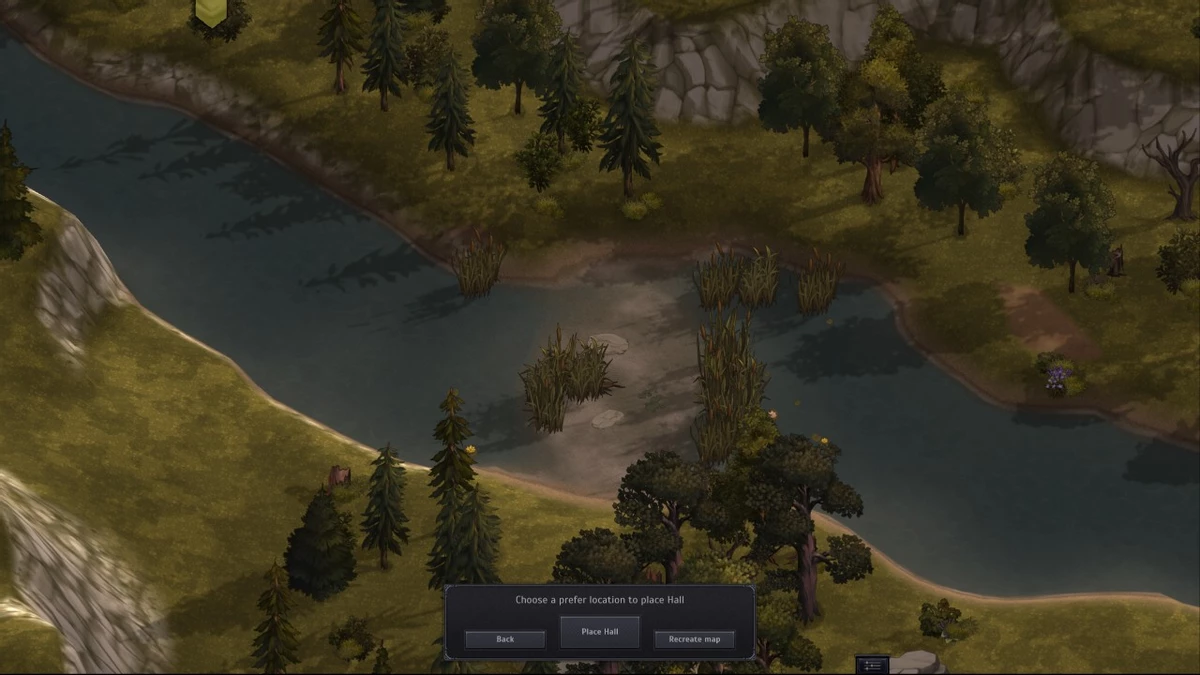
Players can now begin their adventure in any province on the global map. Each region comes with predefined unique parameters that shape the local map: available resources, biome type (which will affect climate conditions in the future), hilliness, and terrain complexity. Visually, the world has become much richer—the authors have reworked tree and bush models, updated fields, and added rivers with fords and water lilies. Before starting a game, players can inspect the generated map, where all resources are clearly marked. If the result doesn't meet expectations, the map can be regenerated.
New resources and related mechanics have been introduced. A special place is occupied by bloodberries—an edible resource that can be gathered in the forest by a Herbalist. These berries are used to brew a herbal (or berry) infusion with healing properties—it relieves pain. Simultaneously, the developers have reintroduced the mechanic of receiving injuries during training. This decision complicates the process of training soldiers without resource expenditure, making the game balance more thoughtful.
Significant changes have occurred in the game's political system. Lord-politicians no longer spend funds to bribe colleagues—their primary tool of influence is now sermons. Meanwhile, followers and even unfriendly neighbors regularly donate money to politicians, which is then distributed among listeners during sermons, allowing them to strengthen their influence. Internal trade has gained additional significance in the new system. Lords gradually present increasingly serious demands—from obtaining heir status to claiming the crown. The popularity of lords now forms more naturally: for example, workers can voluntarily become followers of a lord-manager. Other lords tend to improve relations with those who have broad support among peasants and warriors. When a politician's influence reaches the level of the king's authority, they begin to openly claim power.
City organization has undergone a serious rework—it is now built around a system of church parishes. The previous rule linking peasant mood to the distance of their workplaces has been removed. The key factor is now the location of housing relative to temples: for residents (including prisoners), it is critically important to live within the temple's radius—conventionally, the area where the bell's ringing can be heard. Only such residents attend sermons. Politicians have gained the ability to compete for the Bishop's loyalty by delivering sermons of faith. New types of temples have been added to the game. A wooden temple covers a larger area than an altar, and a stone temple (which unlocks later) has an even wider radius of influence.