

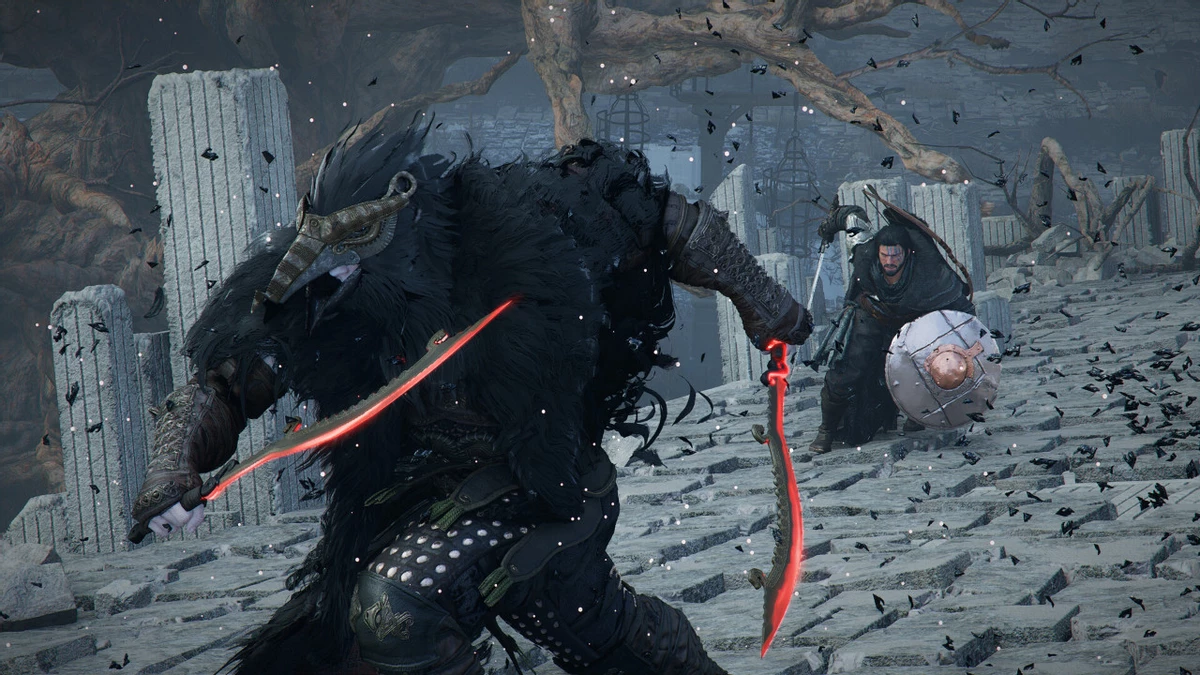
In Search of a Pretext to Criticize Crimson Desert, Polygon Portal Slams "Non-Historical Swearing"
Inclusive game journalists are offended by the insult to gays
Polygon’s write-up on the fantasy action title Crimson Desert reads less like a review and more like a takedown of the game’s imagined world. Their beef wasn’t primarily with combat or mechanics; it was with the setting itself, which they labeled “offensive to common sense.” The studio, Pearl Abyss, is accused of letting internal logic slip through the cracks — an assemblage of medieval clichés pasted together without the sort of internal consistency that makes a made-up world feel lived-in.
What really set them off was the language. Trying to ape the rough tone of The Witcher 3, the devs peppered dialogue with modern profanity that, according to the article, rings fake in a knights-and-castles milieu. Early on a line drops the homophobic slur “coc****gler” — a usage the critics argue is anachronistic, i.e. a lexical formation that wouldn’t belong in a medieval lexicon because similar constructions only showed up in the late 19th century (e.g., certain compound insults and their social meanings are historically recent). The word “fuc**ng” appears as a blanket intensifier, though historically it carried a literal sense rather than the colloquial emphasis it’s given here. Likewise, terms like “bastard” or “freak” are flagged as misapplied for that era.
Polygon’s point: the game’s swearing isn’t just crude, it’s culturally thin. They claim real period invective tended toward sacreligious curses, yet religion in Crimson Desert is largely decorative and doesn’t inform speech. Add to that the complaint that every character talks the same — no dialectal flavor, no class markers, no local turns of phrase — and the result is dialogue that sounds manufactured rather than rooted in a specific social world.